
M.A.M.A. Issue n.9: Ruchika Wason Singh and Kristin Procter
The ProCreate Project, the Museum of Motherhood and the Mom Egg Review are pleased to announce the 9th edition of this scholarly discourse intersects with the artistic to explore the wonder and the challenges of motherhood. Using words and art to connect new pathways between the academic, the para-academic, the digital, and the real, as well as the everyday: wherever you live, work, and play, the Art of Motherhood is made manifest. #JoinMAMA
NOVEMBER, 15TH: HOME IN/OUT BY RUCHIKA WASON SINGH and BURST by Kristin Procter
Art:
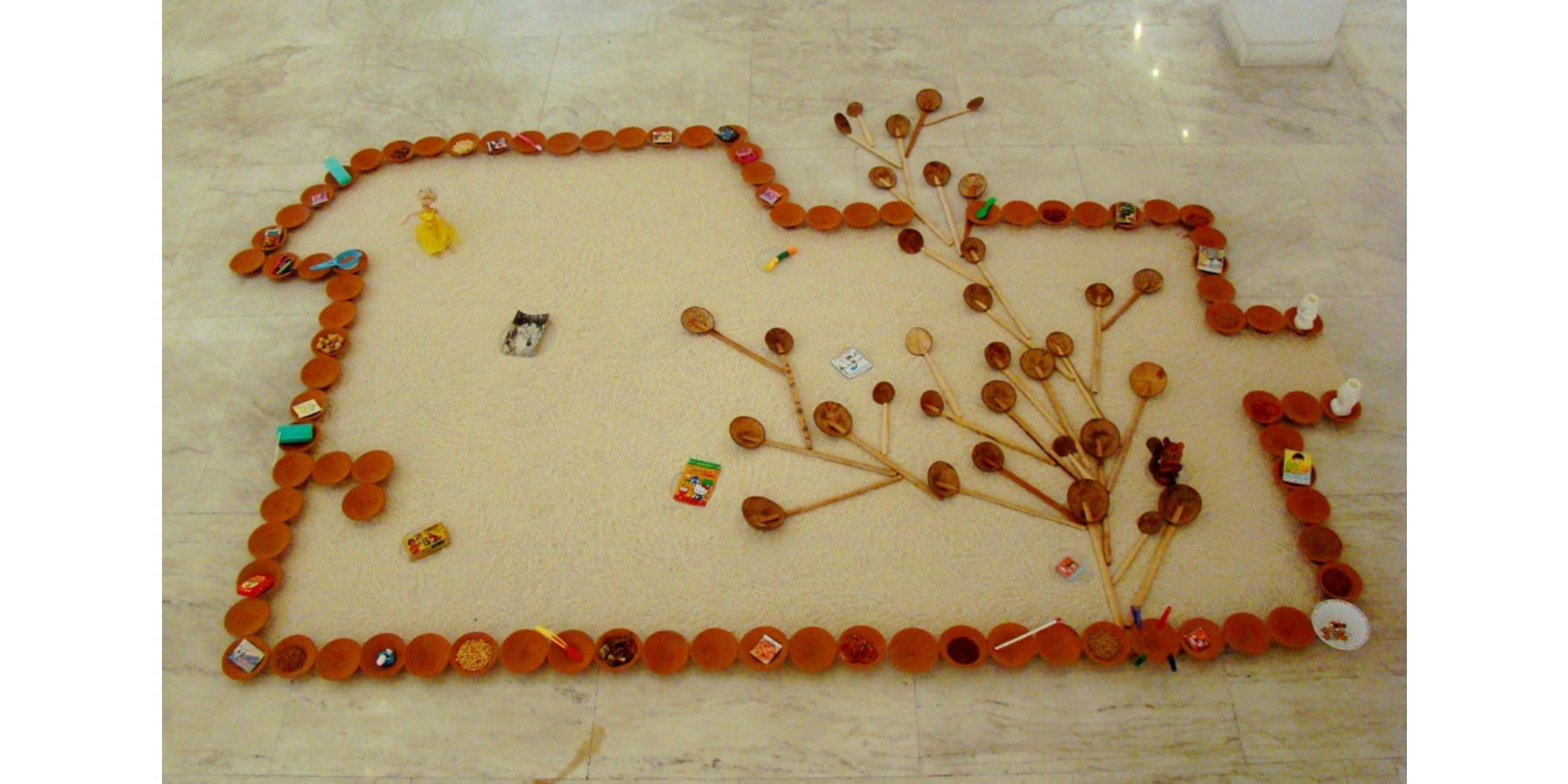
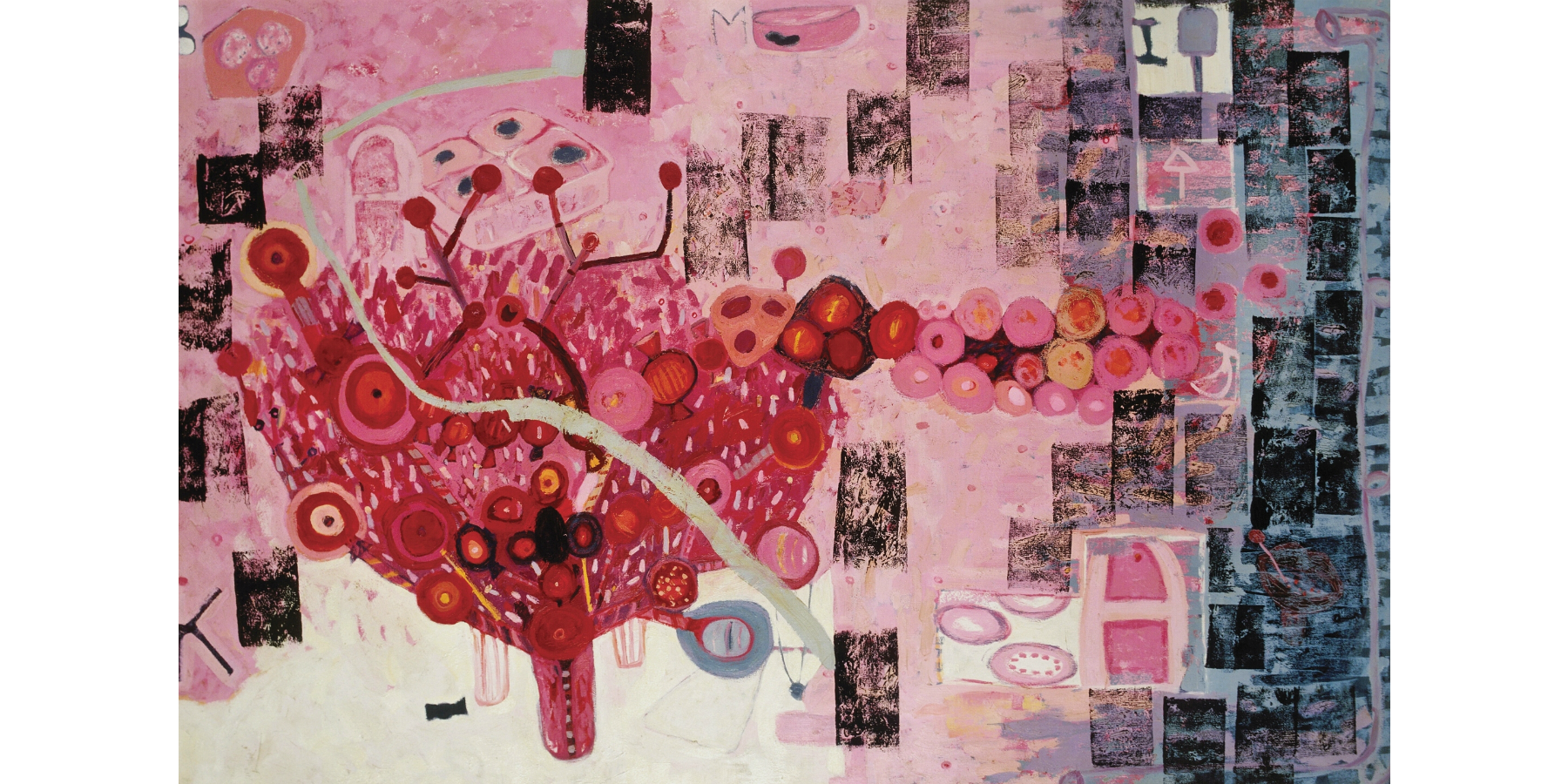
Home In/Out (2010) by Ruchika Wason Singh
Presenting my works from the project Home In/Out for this M.A.M.A. issue makes me introspect about my art and its intuitive process. From the vantage point of an artist-mother, I am now at a stage of reflection. The exercise of relooking, sorting and selecting the works for the presentation is a departure from exercising my dual identity in creating my work, to utilizing it for re-searching its creative implications. It has brought me to ask myself a question (which, during the process of creation, was superseded by the spontaneity of emotive expression). How has motherhood impacted my art process? It is with this in mind that I look back at my project Home In/Out.
My identity as an artist-mother (or mother-artist) has deeply influenced my art. Perhaps its most important role has been to generate maternal emotions within me and the need to creatively express these at the same time. This is obvious from the fact that often, the stages of my life and the phases in my art have run parallel to each other. Pregnancy and motherhood created room, first for embodied experience, and then for physical and emotional interactions with my daughter Meher. Each stage brought some or all of the experiences of anticipation, curiosity, ecstasy and anxiety. It introduced my ‘biological other’ (my daughter) in my life, because of whom I have had to find a new equilibrium in my identity. For instance, while mothering, the artist in the mother occasionally struggled to find time for making art. At other times, the mother in the artist emerged as a fount for contextual and visual resources for artistic creation. Motherhood thus created a ground for experiences which were both physiological and emotional, obvious yet mysterious, all of which needed a release.
Post-pregnancy, the home became the site for a constantly evolving maternal performance in the everyday, and this began to evolve as a subject matter in my art too. The joys and anxieties of mothering Meher started surfacing as artistic concerns, thematically and often materially. In Home In/Out the binaries of the inside and the outside allude to the ‘home’ within and outside the body of the mother, though I am primarily concerned with the latter. At the same time it also deals with the idea of the home within the domestic space and the social space beyond it. Beyond the womb and the placenta, the exterior space in the larger world is the new ‘home’: the domestic and the social space, in which the relationship with the biological other is established, constructed and evolved. This new home outside of the mother’s body (mine) becomes a region of care that is naturally nurturing, and also subject to socially and culturally constructed maternal anxieties; to which the mother in the artist (in me) responds and the artist in the mother (in me) re-responds. Questions and concerns related to the upbringing and welfare of my daughter which confronted me during care giving, nurturing and feeding, were transmuted into an artistic quest, leading to drawings in conté and charcoal, etchings, oil paintings and installations with found objects. The anxieties of mothering a daughter hence re-emerge in literally different forms; the vulnerability of the girl child becomes a central question in art as in life.
Mothering also blurred the boundaries of the studio and home, making mothering and art creation seem intertwined. This happens, for instance, in installations where the act of procuring groceries, and that of procuring art materials, blur into one another, as rice grains, cooking ladles, spices and containers from the kitchen (amongst other materials) become testimonies for my maternal emotions (which I sought to route through cooking and feeding), as well as a re-creation of maternal memories. Apart from their daily, utilitarian function, the objects now perform a (different sort of) creative function, which, nevertheless, also harks back to their original meaning. Therefore, these objects serve as actual, physical metonymies expressing the relationship between my daughter and me. In other artworks, forms from Meher’s kindergarten and pre-teen years, such as candies, alphabets and Barbie dolls, metamorphosed into botanical forms; through them, I celebrated the new ‘girly’ world of my daughter, while also perhaps reliving my own past as a young girl.
Motherhood thus gave me the privilege to question, re-imagine and perceive anew the world I inhabit, through sharing it with my daughter. Her presence in my life has helped evolve both the artist and the mother in me.

WORDS:
BURST by Kristin Procter
I
There is a skill of precision required in judging the right moment to twist the tap, and stop the flow of water stretching the bulbous balloon to its limit. Too little liquid and the ammunition will roll, dry and harmless, belly up in the grass – dud. Too much pressure and the little rubber ring that kisses the tap will be torn from its pregnant womb, launching the attack on yourself – spurt.
II
In the eggshell tub, she floats her moon belly back over her knees to hero’s pose, head tipped to the sky, eating piano snowflakes with her persimmon cheeks and tomato tongue. She beckons her baby with body and breath. She opens; her fingers expand around the curve of his collapsible skull, as he breaks to the surface, erupting from water, to water, to arms.
III
Martha Stewart dismantles pomegranates online. She slices the sphere into two lobes, each of which in turn she cradles in her hand before swiftly striking the flesh with a large wooden mixing spoon. She insists this is not spanking, but as the tender red insides fall into a pile on the table, I can’t help but wonder how exactly Martha spanks.
IV
Dangling fingers like bait in a fish farm, she trawls for shimmer in her drawer of delicates. She pushes aside armpit high monthly mom pants. Her pinkie hooks a long forgotten key lime G-string, with a lace ruffle and history that quicken her pulse. She slips off her track pants and wiggles back into her sexuality. In front of the full length mirror, it is difficult to say which pops first, her eyes or the undergarments’ over-extended waistband. Either way, her hip stings and her ankles have been swallowed by a polyester green tree snake.
read full text here


M.A.M.A. Issue n.8: Cynthia Patton and Sarah Nicolls

The ProCreate Project, the Museum of Motherhood and the Mom Egg Review are pleased to announce the 8th edition of this scholarly discourse intersects with the artistic to explore the wonder and the challenges of motherhood. Using words and art to connect new pathways between the academic, the para-academic, the digital, and the real, as well as the everyday: wherever you live, work, and play, the Art of Motherhood is made manifest. #JoinMAMA
NOV, 1ST WAITING FOR WORDS CYNTHIA PATTON – FEATURING THE ART OF SARAH NICOLLS
Art:
MOMENTS OF WEIGHTLESSNESS by Sarah Nicolls
The show takes my Inside-Out Piano as its starting point and explores the metaphorical parallels of making a unique piano and becoming a mum. I push, ratchet and swing the piano during the show, using the piano as part of the domestic furniture to travel into different moments of parenthood. Combining lyrical music, movement, narrative and a grand piano played like you’ve never seen before, I tell my story of becoming a mother.
WAITING FOR WORDS Cynthia Patton – From Mom Egg Vol. 11 “Mother Tongue”
I was in bed when Katie slipped past, heading for the stairs. My slender, caramel-haired daughter didn’t look at me or speak. She was a shadow, receding with the dawn.
I huddled beneath the down comforter, filled with foggy, nameless emotions. I knew I should go downstairs and engage her as the specialists instructed me. Make good use of our precious free time. With an autistic child there’s always something to work on: social skills, sign language, speech. Instead a prayer rose unbidden. Please give me words. I can do without hugs and kisses, but I need more words, need them like air.
Katie was five yet spoke like a two-year-old—when she spoke at all. A knot lodged between my shoulder blades. What if conversation never came? Katie was smart enough, but speech remained a challenge. Her mind was a secret garden, the thoughts overflowing with nowhere to go. I wanted to hear her stories, her emotions, her feeble attempts at jokes. I wanted her to look at me, smile, and say Mommy.
I released the breath I hadn’t realized I’d been holding. My tears rained down as I prayed for the day the words broke free, flooding fallow fields.
Katie was nonverbal for two years, eight months. At three, after a year of intensive therapy, she had a spoken vocabulary of 50 words. By four she used two-word phrases. By five she assembled short sentences.
Special needs parenting is often a strange blend of gratitude, sorrow, pride, and guilt. I was excited and proud when Katie mastered a new sentence. Yet I was sad she had to work so hard and guilty I wanted more. Why couldn’t I simply be grateful? I was, but when I looked in her eyes I saw an IQ boiling, just out of reach, and wanted to smash something on her behalf.
It’s hard to watch your child struggle, especially when there’s nothing to do but wait.
At six Katie answered simple questions. By seven she used adjectives and worked to master possessive pronouns. I fought for additional speech therapy and finally the long, slow slog ended. Her speech gained momentum.
One night shortly after she turned eight, Katie asked for the blue dolphin as she climbed into bed. Her words were crystal clear, so I praised her as the therapists trained me.
She asked again, and I showed her the blue cat.
“No,” she said. “Want dolphin please.”
“We don’t have a dolphin.”
“Dolphins swim in the water.”
“You’re right,” I said. “They’re good swimmers.”
I reached into the basket that contained her stuffed animals. “Do you want the lobster?”
Katie smiled and reached for the toy. She played with the pinchers while I felt smug about discovering the glitch where her brain veered off course.
She looked up. “This is red. Red lobster.”
“I know, but it lives in the water.”
Her pained look said I was the one with the neurological problem. “I want blue dolphin.”
She clenched her teeth—the beginning of a tantrum. I thought fast. “Why don’t you pick the animal you want to sleep with?”
This wasn’t the routine. After a long pause she rolled out of bed, rooted in the basket, and yanked something out. I laughed when I saw Eeyore. “That’s not a dolphin. It’s a donkey.”
“Blue donkey,” she said, climbing into bed.
Katie knows the difference between a dolphin and a donkey. Sometimes her brain scrambles the words.
We recited Goodnight Moon while Katie stroked Eeyore’s ears. I said, “I love you” as my hand automatically made the sign.
She signed I love you as Max, our cat, entered the room. “Good night, sweetie. Max says good night too.”
“Goodnight, Mommy.”
I froze, unsure I’d heard correctly. Katie had never spontaneously greeted anyone. She could say the words, but I needed to coax them out.
Max meowed, and Katie giggled. “Good talking, Max.”
She’d done it, twice in one night. I wanted to cry and shout and jump on the bed.
So what if it happened a few years late? So what if it wouldn’t happen again for months?
These moments sustain me.
A few months later, I was reading yet another progress report. Katie was in the kitchen studying cookbook photos. “That’s soup. Soup is hot. I like soup. Soup is good. I can make it. I’m stirring soup. Let’s make chicken tortilla soup.”
She flipped the page and talked about pumpkin pie. I didn’t know she knew what pumpkin pie was. More pages flipped, followed by a long discourse on chocolate cake, then meat, then pasta, then salad with cranberries. It was as if she wanted to say every sentence she could that included the particular food item.
To say I was stunned would be an understatement.
It went on for 15 minutes, maybe longer.
I listened as the words poured out, barely breathing. Then it hit me. This was it, the moment I’d been waiting for. The words were breaking free, spilling into the kitchen and filling up the room.
They filled me up. Better than any meal.
Cynthia Patton is an award-winning author, speaker, advocate, and attorney, and founder of Autism A to Z, a nonprofit organization.

Sarah Nicolls, Mother-Pianist
What your work focuses on today?
I am about to start touring my theatre/music show Moments of Weightlessness, featured here, beginning on 28th November in Oxford. The show takes my Inside-Out Piano as its starting point and explores the metaphorical parallels of making a unique piano and becoming a mum. I push, ratchet and swing the piano during the show, using the piano as part of the domestic furniture to travel into different moments of parenthood.
How has your pregnancy affected you as an artist? Did you feel particularly driven? How the world around you reacted?
I don’t think pregnancy affected me particularly as an artist: frankly, I was too busy trying to get all my work finished! I did enjoy the blossoming effect. I also discovered the ‘public property’ aspect of being pregnant (my bump seemed quite large, so everyone told me I was definitely having “boy twins TOMORROW”!). It got slightly tiring but then I tried to keep absolutely positive about that, thinking it’s nice that everyone gets excited about a new life. Perhaps the same way we are all trained by the news to consider deaths that are not related to us. Maybe there should be more birth stories on the news…?!
What changed when you became a mother?
After the initial period of shock/dreaminess/night-and-day blur, I became much more efficient at doing work, using nap times to quickly get on with things. But then, very gradually, life changes fundamentally in so many ways.
What do you feel changed in your creative process?
Though at first it was about efficiency – doing more, faster – it became more about being brave enough to simply express things. Birth itself is a dramatic experience and there was a lot to process as a result of that. I think motherhood has made my confidence grow, has made me more political, perhaps thinking about the bigger picture more. I find I have less patience for idiotic ways of doing things (though I was probably fairly impatient before!).
I had the new piano built right when my second child, Sylvie, was born. What was surprising was that it could swing: I wasn’t expecting that at all. I had asked for the piano (a full-sized grand piano, with the strings turned vertically up from the keyboard, so 2.5m tall) to be so that I could move it myself. This meant getting it from vertical to horizontal – and that’s 180kg of piano, on my own. So the builders made a pivot frame that I could ratchet up and down, with this point around which it could rotate. The incredible wonder of seeing an entire grand piano moving freely through the air seemed to me to fit so fully with creating new life: the motivations we have to design and build something go into a new realm once the thing takes on its own life. We imagine what life with children will be like but really there’s no comprehension of how totally and fully it will absorb us: through mad levels of exhaustion (right now for example my eyes are actually hurting, they’re so tired!), through a deep change in lifestyle: no nipping out for a pint with your partner or trips to the cinema (always the cliched example from parents when we were first pregnant); but also the deep desire to be with your kids, the feeling that if you miss a day with them you feel quite desperate to get home again, the desire to make space for just you and you little family to be together; and the amazement of seeing how humans grow and develop: how language is acquired, seeing where humour comes from; experiencing literally the insanity of the forming brain up close.
So, I began to take on this quite different approach to my own work which was much more biographical, much more explicit, using words, action, movement to investigate both the new instrument and the new lives in my life.
Do you think you gained inspiration out of this transforming experience?
Absolutely. It would be hard to be unaffected by it! It’s so personal yet universal and the feeling one gets from talking to other new mums is reassuring and totally levelling: everyone experiences the same things yet it’s also so intimate, deep and personal.
Strengths and weaknesses of being at once a mother and an artist.
Being tired is hard! Creativity doesn’t fit neatly into an hour here or there very well. The possibly selfish – or, in any case, self-absorbed expansiveness of creative exploration is very hard to do within nursery hours. I find I really miss the unending evening work, where you could just run with an idea until midnight or beyond and that would be fine. Someone said to me recently that actually it’s better to just honour how you work best and if that means going on a 5 day residency, then maybe that’s what you have to do. I thought this was really interesting and empowering because some mother groups look into how mothering can happen alongside or simultaneously to creativity but for me, each is more successful when fed by the other but not trying to happen at the same time!
Expectations for the future?
We hope to move somewhere with more outside space, so I imagine the kids running around or digging or climbing whilst I’m in my studio, exploring ideas..! I hope I’ll do more theatrical work with the piano but also just lots of piano-based work too: trying to see what sounds I can extract from my Inside-Out Piano. I’ve recently stopped protesting as much when others call me a composer, though starting a new trajectory is very challenging, scary, slow and fulfilling. I imagine life like a forest: a series of trees which we climb. When we reach the top of one tree and can look out on the rest then it’s at that moment that I see another tree to jump to and go there. Sounds exhausting, doesn’t it?!
www.sarahnicolls.com